





Watch
As industrial investment continues to grow and expectations for sustainable development become increasingly important, environmental governance has emerged as a key factor in enhancing the competitiveness of industrial estates. Beyond providing world-class infrastructure and utilities, modern industrial parks are expected to implement data-driven environmental management supported by long-term monitoring and close collaboration among government, academia, industry, and local communities.

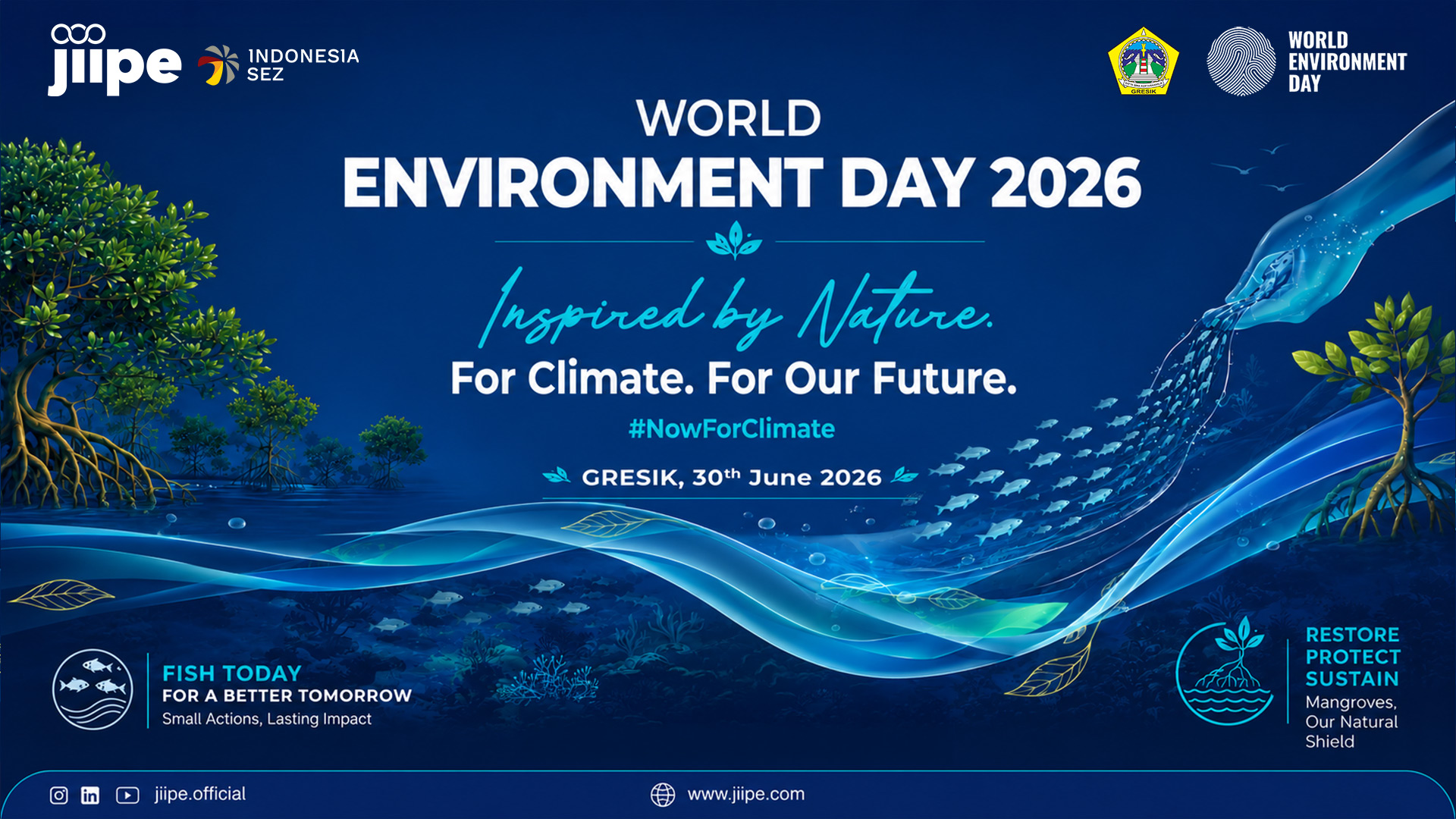
This perspective was highlighted during the 2026 World Environment Day commemoration organized by PT Berkah Kawasan Manyar Sejahtera (BKMS), the developer and operator of the Java Integrated Industrial and Ports Estate (JIIPE) and Gresik Special Economic Zone (SEZ). The event brought together representatives from the Gresik Regency Government, academic institutions, industrial tenants, coastal communities, and various stakeholders to strengthen collaborative efforts toward sustainable environmental management.
Vice Regent of Gresik, Asluchul Alif, emphasized that World Environment Day should not merely be observed as a ceremonial event, but should translate into tangible actions supported by cross-sector collaboration.
"Protecting our environment requires collective commitment from industry, coastal communities, and all relevant stakeholders. We highly appreciate the partnerships that have been established, including social protection initiatives for fishermen and coastal ecosystem rehabilitation through mangrove restoration," said Asluchul Alif during the event held on Tuesday, June 30, 2026.
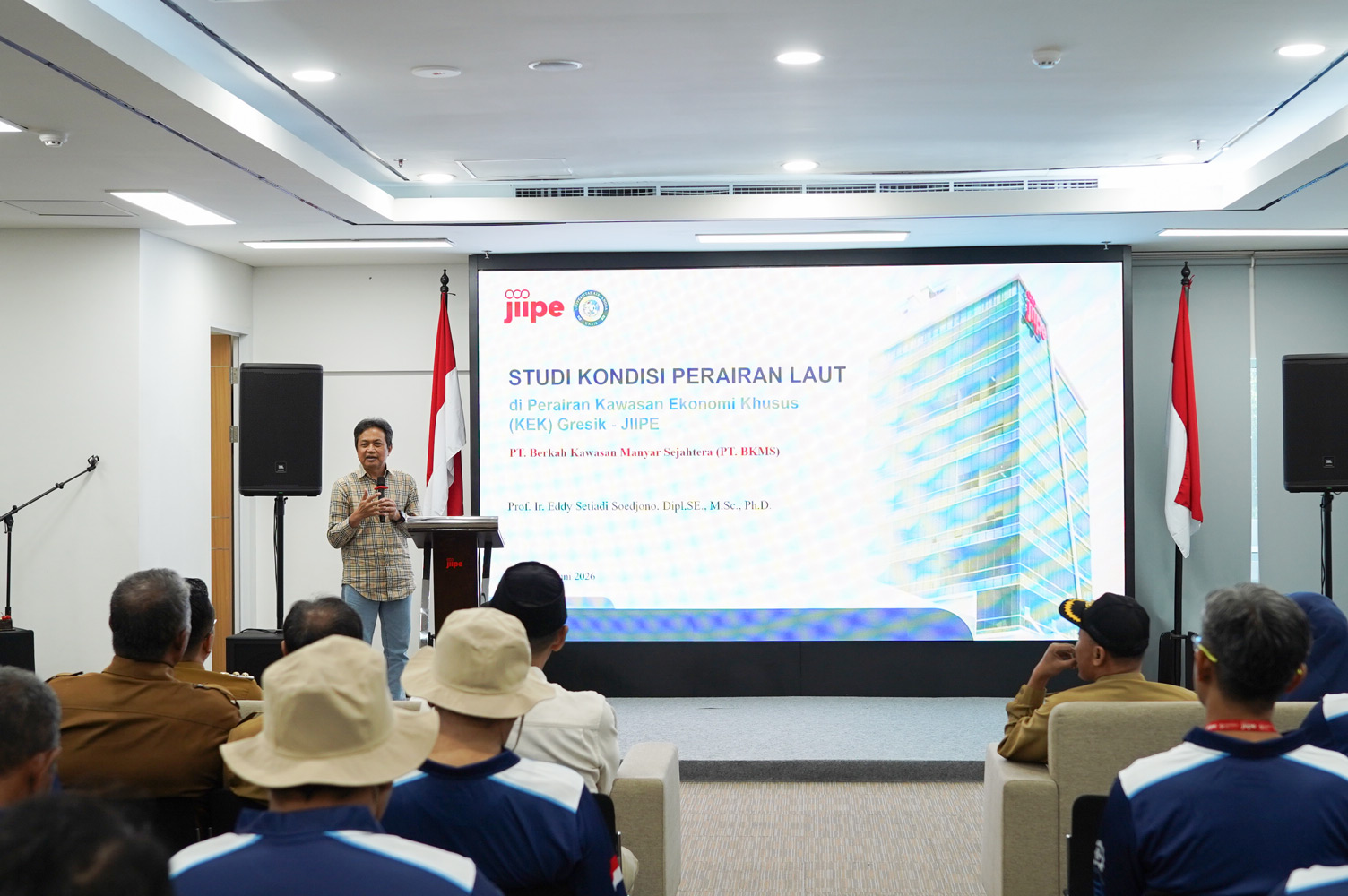
During the same forum, Professor Eddy Setiadi Soedjono, Professor of Environmental Science at the Faculty of Science and Technology, Universitas Airlangga, explained that environmental conditions in industrial and coastal areas cannot be accurately assessed through isolated observations or a single environmental indicator.
"Changes in water quality, coastal ecosystems, and fisheries productivity are influenced by numerous interconnected factors. Comprehensive conclusions can only be drawn through long-term monitoring, periodic environmental data collection, and multidisciplinary scientific studies," Prof. Eddy explained.
According to him, evidence-based environmental management provides a critical foundation for ensuring that environmental policies remain objective, measurable, and sustainable.
Echoing this view, Sri Subaidah, Head of the Gresik Regency Environmental Agency, stated that industrial development and environmental protection must progress hand in hand through consistent environmental monitoring and concrete actions on the ground.
"We appreciate BKMS's initiative to plant thousands of mangrove trees along the Kalimireng coastal area. Besides reducing coastal erosion and strengthening climate resilience, mangrove restoration represents a long-term environmental investment whose benefits will be enjoyed by future generations," she said.
As part of this commitment, JIIPE conducts regular environmental quality monitoring through accredited laboratory testing in accordance with Government Regulation No. 22 of 2021, providing a scientific basis for environmental evaluation and sustainable estate management.
Concrete Actions for Coastal Ecosystem Restoration and Community Livelihoods
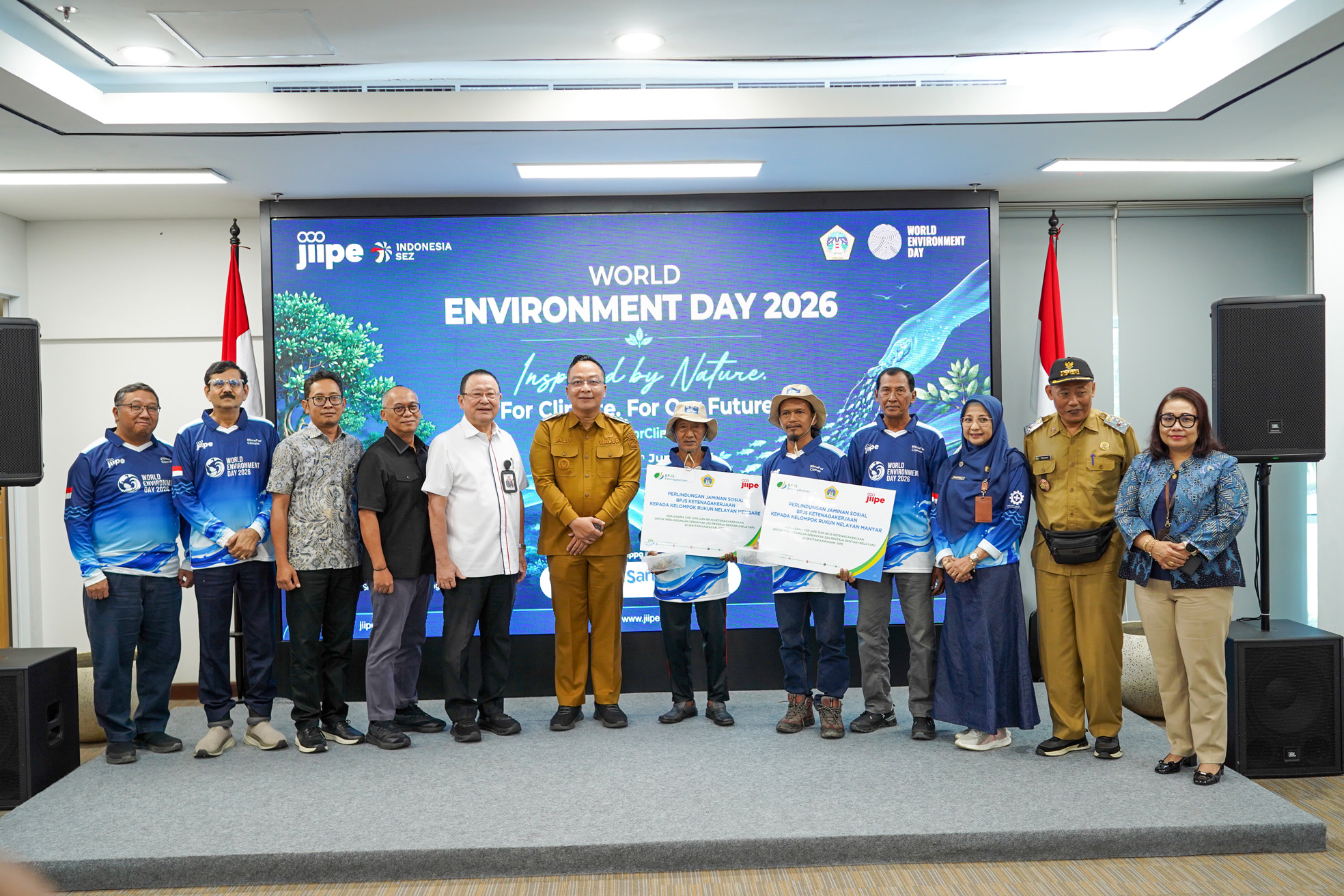
In addition to strengthening environmental governance through scientific monitoring, JIIPE continues to implement various coastal ecosystem restoration initiatives designed to generate long-term ecological benefits while supporting the livelihoods of local fishing communities.
To commemorate World Environment Day 2026, JIIPE collaborated with the Gresik Regency Government, academic institutions, industrial tenants, coastal communities, and other stakeholders to carry out the planting of 1,000 mangrove seedlings, the release of 1,000 fish fingerlings, and 100 juvenile crabs in the Kalimireng coastal area.
Arief Witjaksono, Head of the Gresik Regency Marine and Fisheries Agency, stated that restocking fish and crab populations is expected to enhance marine resources while improving the welfare of local fishermen.
"We hope these initiatives will increase fish availability in nearby waters, allowing fishermen to secure better catches without having to travel farther offshore. Maintaining these efforts collectively is essential to ensuring lasting ecological and economic benefits," he said.
Representing the Kalimireng coastal community, Isharul expressed his hope that collaboration among government institutions, academia, businesses, and local communities would continue to grow stronger, ensuring that industrial development remains in harmony with environmental conservation.
Similarly, Hamzah Takim, Chairman of the Gresik Regency Fishermen Association (KTNA), viewed mangrove restoration along the Kalimireng River as an important initiative to protect coastal ecosystems while supporting the sustainability of local fishing grounds.
Strengthening Environmental Infrastructure as Part of ESG Implementation
Beyond environmental monitoring and ecosystem restoration, JIIPE continues to develop environmental infrastructure as part of its broader commitment to Environmental, Social, and Governance (ESG) principles.
The estate currently operates a Reduce, Reuse, Recycle (3R) Waste Processing Facility, supporting responsible waste management across the industrial area.
As industrial activities continue to expand, BKMS is preparing to upgrade this facility into an Integrated Waste Management Center, increasing its capacity to manage waste independently through a more comprehensive, efficient, and sustainable system.
According to Bambang Soetiono, President Director of PT Berkah Kawasan Manyar Sejahtera, environmental governance has become an integral pillar of JIIPE's long-term development strategy.
"In the future, the competitiveness of industrial estates will be determined not only by infrastructure and investment opportunities, but also by the credibility of their environmental governance. We therefore continue to strengthen data-driven environmental monitoring, develop environmental infrastructure, and foster collaboration among government institutions, academia, industrial tenants, and local communities as part of our long-term strategy for sustainable industrial development," Bambang said.
Through the momentum of World Environment Day 2026, JIIPE reaffirms its commitment to strengthening environmental governance by advancing scientific environmental monitoring, expanding environmental infrastructure, restoring coastal ecosystems, and promoting multi-stakeholder collaboration as part of building a competitive, responsible, and sustainable industrial estate.